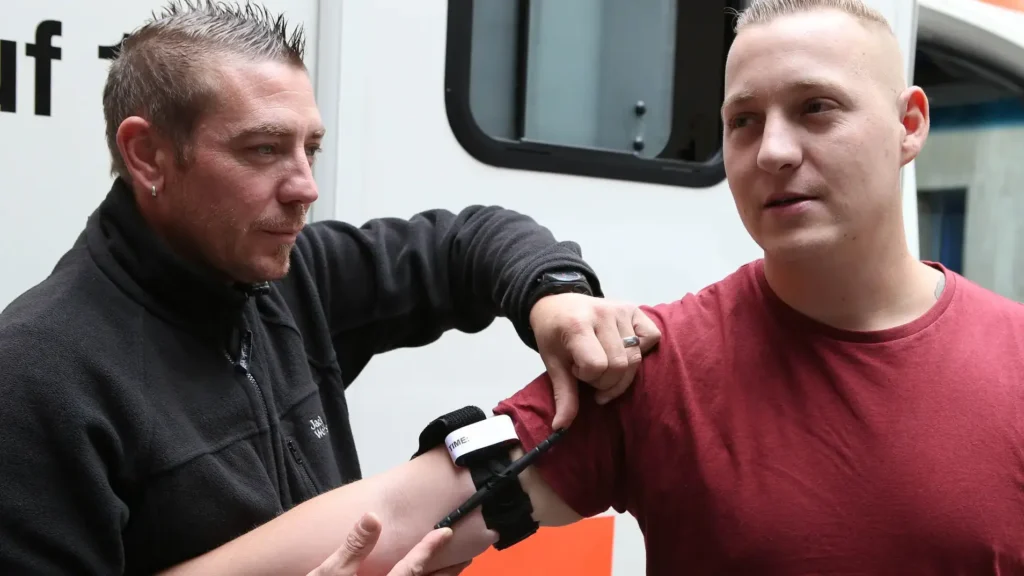
In emergency terminology, a mass casualty incident — known in German as MANV (Massenanfall von Verletzten) — describes situations such as terrorist attacks, train accidents, or mass shootings, where the number of injured exceeds available resources.
While Pforzheim has so far been spared from major disasters, the key question remains: Would the city be prepared in such a case?
Local Authorities: “Yes”
“Yes,” says Sebastian Fischer, head of the fire department and civil protection. According to him, both personnel and equipment are prepared for a potential emergency.
A central element is continuous training. Emergency responders regularly participate in exercises to prepare for large-scale incidents.
Training as a Core Measure against Disaster
Handling a mass casualty event requires coordination, speed, and routine.
For this reason, emergency services focus on:
- Coordination between different units
- Regular training
- Practical exercises
No Final Decision at State Level
At the same time, there were still open questions at the state level.
The state of Baden-Württemberg had not yet made a formal decision on upgrading disaster protection equipment. However, the topic was already under discussion.
A spokesperson from the Ministry of the Interior stated that it would be useful to equip emergency vehicles with tourniquets — devices used to stop severe bleeding.
No details were given regarding timing or costs.